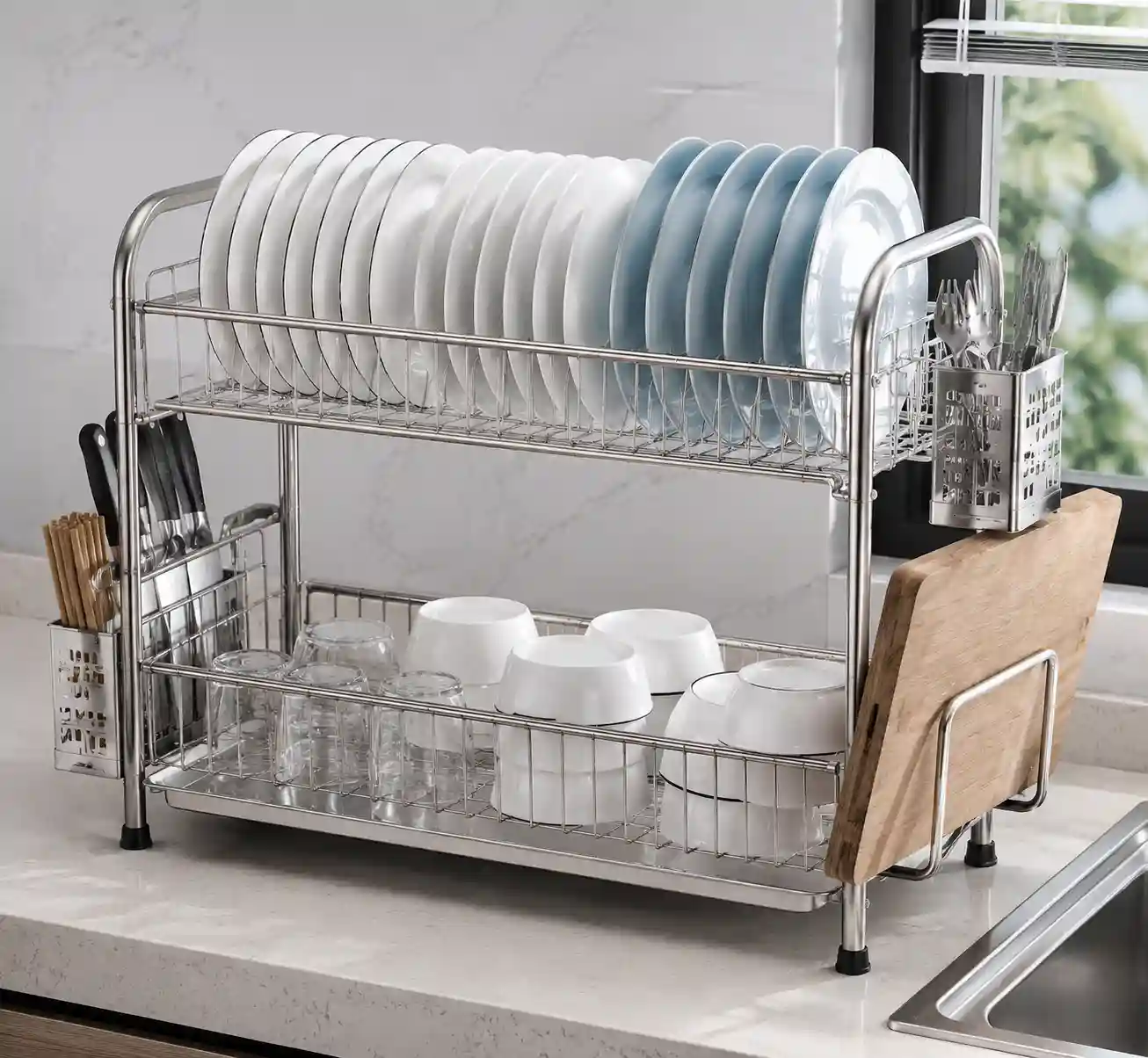
For kitchen hardware wholesalers, cabinet manufacturers, and furniture project contractors, choosing the right stainless steel dish rack material is not only about product appearance — it directly affects product quality, customer satisfaction, and long-term business reputation.As a professional stainless steel dish rack supplier, understanding the difference between 201 and 304 stainless steel helps buyers select the right product for different kitchen projects.
In coastal markets such as the UAE, South Africa, and other seaside regions, corrosion resistance has become one of the most important requirements for kitchen hardware products. Stainless steel dish racks are installed in high-moisture areas near sinks, where they are exposed daily to water, detergent, humidity, and salt-containing air.
Many buyers search for stainless steel dish racks because they want better durability than ordinary metal products. However, one common question remains: how to choose between 201 stainless steel and 304 stainless steel dish racks?
Although these two materials have a similar polished appearance, their corrosion resistance, service life, and application range are completely different.
Choosing the wrong stainless steel grade may result in rust complaints, product replacement requests, and additional after-sales costs for distributors and furniture manufacturers.
1.Why Coastal Areas Need High-Quality Stainless Steel Dish Racks
Coastal kitchens create a more demanding environment for metal hardware.
In UAE cities such as Dubai and Abu Dhabi, high temperature and humidity accelerate corrosion processes. Salt particles from seawater can enter indoor kitchens and combine with water stains and detergent residue around the sink area.
In South African coastal cities such as Cape Town and Durban, marine air and sea fog create continuous chloride exposure. These conditions quickly reveal the difference between low-grade and premium stainless steel materials.
Compared with cabinet handles or decorative hardware, dish racks are more likely to develop corrosion because of their structure:
- Multiple welding points
- Narrow metal connections
- Hidden moisture accumulation areas
- Direct contact with water and cleaning chemicals
For this reason, selecting the correct stainless steel material is essential for coastal kitchen applications.
2.201 Stainless Steel Dish Rack: Cost Advantage with Limited Corrosion Resistance
201 stainless steel is commonly selected for budget-oriented furniture projects because of its lower raw material cost.
Manufacturers reduce nickel content and increase manganese content to achieve a more competitive price. While 201 stainless steel can maintain a clean appearance in dry indoor environments, its corrosion resistance is lower compared with 304 stainless steel.
When exposed to:
- Salt spray
- High humidity
- Frequent water contact
- Cleaning chemicals
the protective surface layer can become weaker over time.
For inland residential projects with limited moisture exposure, a 201 stainless steel dish rack can be an economical solution.
However, for coastal apartments, villas, hotels, and long-term engineering projects, choosing 201 material may increase the possibility of rust issues and customer complaints.
3.304 Stainless Steel Dish Rack: The Preferred Choice for Coastal Kitchens
304 stainless steel is widely used in kitchen applications because of its excellent corrosion resistance.For coastal markets, working with a reliable 304 stainless steel dish rack supplier can help ensure stable material quality and reduce long-term rust complaints.
Its chromium and nickel composition creates a stable protective layer that helps prevent oxidation caused by water, humidity, and salt exposure.
For projects including:
- Coastal residential kitchens
- Luxury villas
- Hotel and resort kitchens
- Premium cabinet installations
- Long-term furniture supply contracts
A 304 stainless steel dish rack provides better reliability and reduces maintenance concerns.
Although the initial material cost is higher, the improved durability helps suppliers reduce warranty risks and strengthen customer trust.
4.201 vs 304 Stainless Steel Dish Rack Comparison
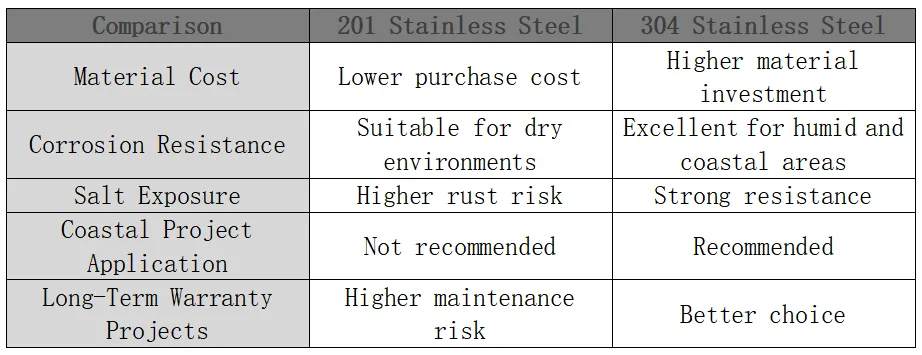
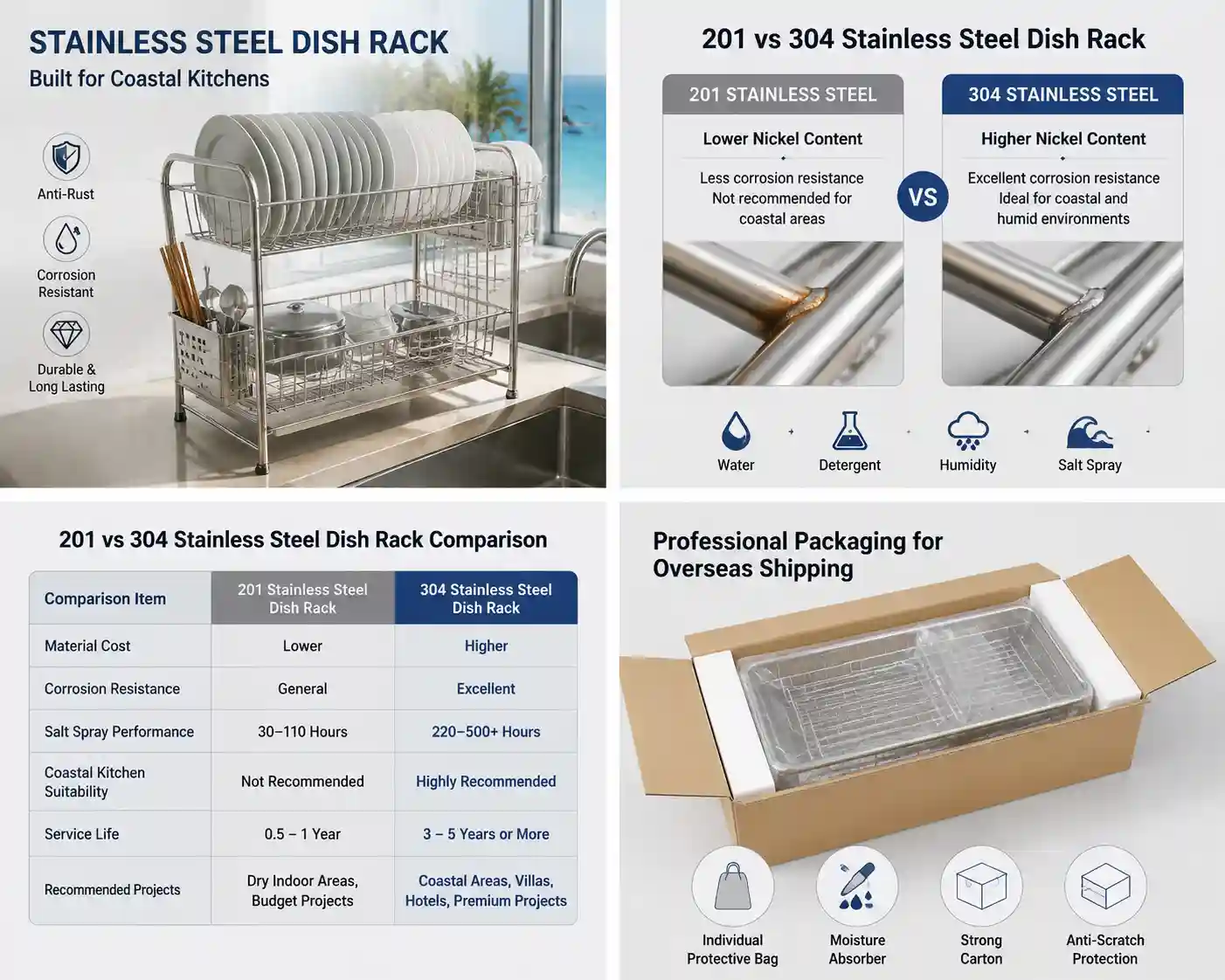
5.How to Select Stainless Steel Dish Racks for Different Markets
(1)Coastal Projects
For projects located near the coastline, SUS304 stainless steel dish racks are the recommended specification.
This includes:
- UAE waterfront apartments
- Beach villas
- Resort kitchens
- South African coastal residences
The combination of salt air, humidity, and daily water exposure creates conditions where 304 stainless steel performs significantly better.
(2)Inland Budget Projects
For dry inland areas, buyers can select materials according to project positioning.
201 stainless steel dish racks may be suitable for:
- Budget furniture projects
- Short-term housing projects
- Price-sensitive markets
For premium cabinet brands and long-term partnerships, 304 stainless steel remains the safer investment.
6.Bulk Order Inspection Tips for Stainless Steel Dish Rack Suppliers
For wholesalers and importers, material selection should always be combined with quality inspection.When sourcing a corrosion resistant dish rack, buyers should evaluate not only the stainless steel grade, but also welding quality, testing standards, and export packaging.
(1)Welding Quality Inspection
Check welding areas, support feet, and connection points carefully. Poor welding workmanship can create areas where moisture remains trapped and corrosion starts.
(2)Material Verification
Request a Material Test Certificate (MTC) before mass production and confirm that the supplied stainless steel grade matches the approved sample.
(3)Salt Spray Testing
For large engineering projects, testing samples before production helps confirm whether the product meets expected corrosion resistance requirements.
(4)Export Packaging Protection
During overseas transportation, container humidity and condensation may affect metal products.
Professional packaging should include:
- Individual protective bags
- Moisture absorbers
- Strong export cartons
- Anti-scratch separators
These steps help maintain product appearance during long-distance shipping.
7.Choose the Right Stainless Steel Dish Rack Supplier for Long-Term Success
For furniture hardware distributors and cabinet manufacturers, stainless steel grade selection is a key factor in product performance.
A low-cost material may reduce purchasing costs initially, but the wrong specification can create higher expenses through returns, replacements, and customer complaints.
For coastal markets in the Middle East, South Africa, and similar regions:
201 stainless steel dish racks are suitable for dry, budget-focused applications.
304 stainless steel dish racks are the preferred solution for coastal, premium, and long-term projects.
Selecting the correct material from the beginning helps suppliers deliver reliable kitchen hardware solutions and build stronger customer relationships.